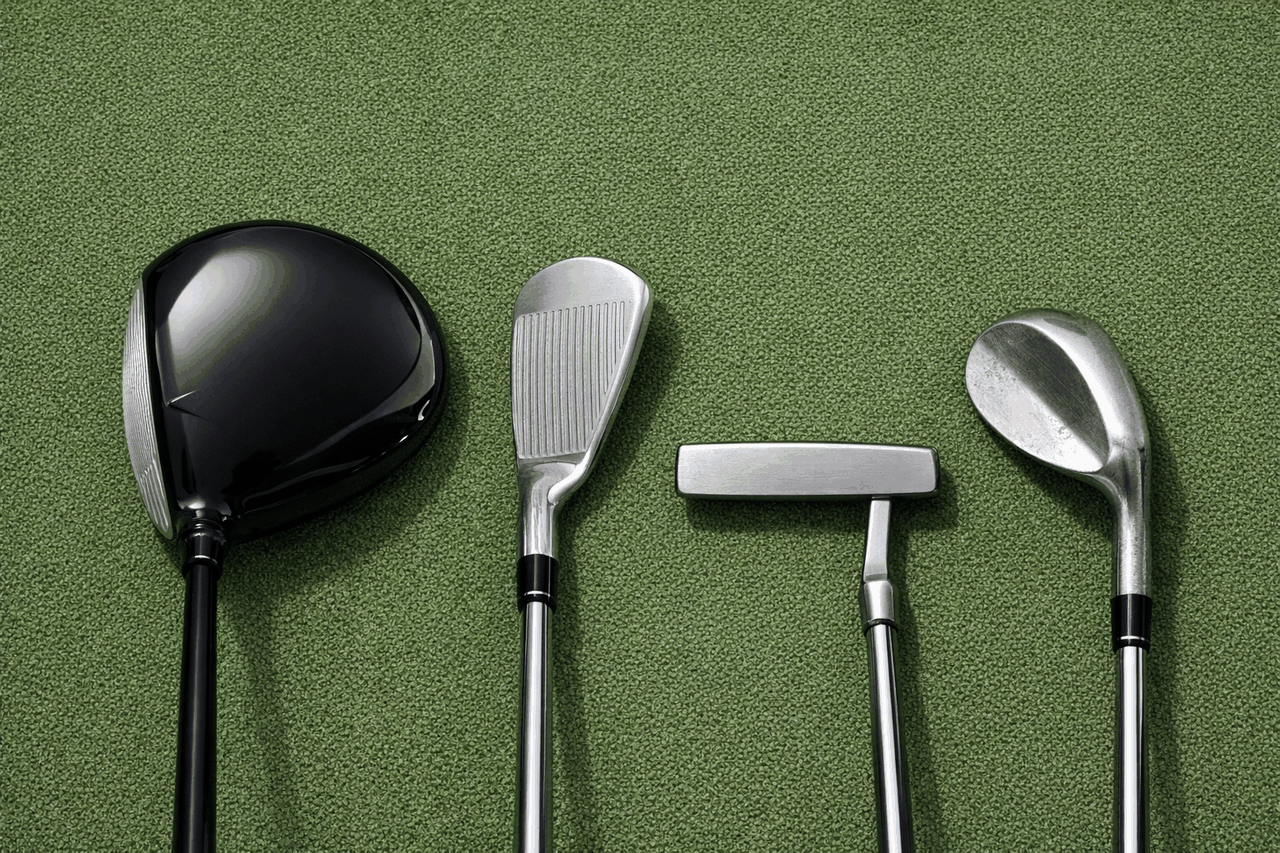
Choose your club by the lie—the surface supporting the ball—and the distance it must fly before rolling. Driver can suit an open tee shot. Approaching a green over a bunker, prioritize reliable carry and enough stopping room.
Work backward from the landing area: identify trouble, choose the flight you need, then select a club you can strike consistently from that lie.
Under the USGA/R&A 2023 edition of the Rules of Golf, you may start a round with no more than 14 clubs, including your putter; fewer are allowed (Rule 4.1b(1)).
Match the club to the shot
| Club | Suitable lie | Intended carry and roll | Trajectory | Precision priority |
|---|---|---|---|---|
| Driver | Teed ball | Long carry; variable rollout | Typically lower than more lofted clubs | Leave room for misses |
| Fairway wood | Tee or clean fairway | Long carry with possible rollout | Low to medium | Choose an open landing corridor |
| Hybrid | Tee, fairway or light rough | Fill a long-club carry gap | Medium to high | Favor repeatable contact |
| Iron | Tee, fairway or manageable rough | Reach a selected landing area | Varies with loft and delivery | Choose a realistic landing window |
| Wedge | Fairway, rough or sand | Shorter carry with planned release | Varies with loft and technique | Control landing spot and rollout |
| Putter | Green or smooth fringe | Mostly roll | Close to the ground | Match start line and pace |
These are starting points. A hybrid can replace a difficult long iron, but available lofts and designs vary; compare its actual job in your bag (Titleist hybrid overview).
Understand the parts and numbers
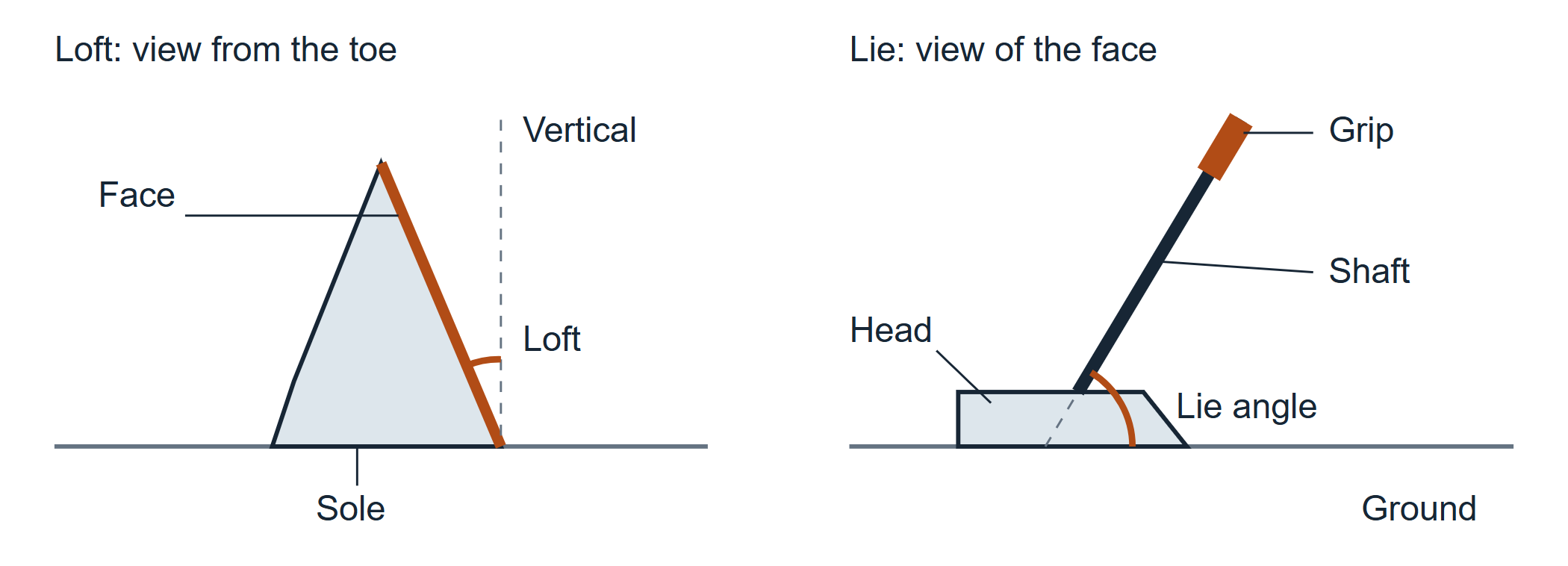
The head contains the striking face and the sole, its underside. The shaft connects the head to the grip, where your hands hold the club. Head design, shaft length and fit all influence how you deliver the face.
Loft describes the face’s angle from vertical in the club’s designed position. Lie angle measures the shaft’s angle to the ground when the club is properly soled. This club measurement is separate from the ball’s lie.
Within an iron set, lower numbers usually mean less loft and longer shafts. Higher numbers generally produce shorter, higher shots. Across sets, a 7-iron’s loft and length can differ. Matching numbers—or even matching lofts—does not guarantee equal distance because strike, speed and club design also matter.
Separate carry from total distance
Flat carry describes flight distance referenced to the same elevation as the strike. Total distance includes bounce and roll. Carry helps you judge whether a shot clears trouble; total helps you judge where it may finish (Trackman’s carry explanation).
Trackman’s 2024 article reports tour aggregates of 282 yards for PGA Tour driver carry and 223 yards for LPGA Tour driver carry. These are not amateur targets or player comparisons under identical conditions. Build your decisions around your own representative shots.
Build your personal carry-gapping log
Use a launch monitor or measured landing areas, recording carry separately from total.
- Keep ball type, hitting surface and conditions comparable. Record wind and temperature; separate range-ball results from results with your playing ball.
- Hit the same-size group with each club using your normal swing. Keep ordinary misses and label obvious mishits separately.
- Record individual carries and use the median—the middle result—as a representative carry. Repeat under comparable conditions to check stability.
- Order the representative carries. Differences between neighboring clubs are your carry gaps; investigate overlaps and unusually large gaps.
| Club and loft | Ball and conditions | Individual carries | Median carry | Gap to next club |
|---|---|---|---|---|
| First club | — | — | — | — |
| Next club | — | — | — | — |
Teaching example: With a bunker guarding the green, compare the required clearance with your normal carry grouping. Allow a margin for ordinary variation, then check whether the landing area accommodates rollout. A single longest shot is a poor basis for that choice.
Make the next equipment decision
Next, decide whether a hybrid should replace a long iron. For shorter shots, choose wedge bounce for your usual turf and sand. Bounce describes the sole’s relationship to the ground and helps resist digging; technique and conditions affect the suitable choice (Vokey’s wedge-bounce guide).